Home renovation contractor services usually include design coordination, estimating, permits, scheduling, trade management, and construction supervision. Nearly every firm lists the same ones, so the list alone won't tell you much. What separates one firm from another is who performs each service, whether the design and pricing work happens before you sign, and, in Denver, whether the builder holds the license class your house requires.
Pull up five remodeling websites and read their services pages side by side. You'll find the same words in nearly the same order: planning, design, budgeting, permitting, project management, construction. It's a menu, and a menu doesn't tell you who's in the kitchen.
We're a design-build firm, and we believe in keeping this work under one roof. This post is about something more useful: how to read any renovation contractor's services list the way we read one. Line by line, asking who does the work, when it happens, and what you get to hold in your hand when it's done.

What Should You Consider Before Hiring a Home Renovation Contractor?
Know the problem before you shop for the solution. The best first meetings we have start with a homeowner describing what doesn't work: nobody can cook while someone else unloads the dishwasher, the kids' bathroom is also the guest bathroom, there's nowhere to drop a backpack. The hardest ones start with a folder of inspiration photos and no problem attached.
Here's a simple test. Write down what's wrong with your house in sentences that don't mention a single finish, fixture, or color. If you can fill half a page, you're ready to start interviewing. If every sentence names a product, you're shopping for materials, and plenty of builders will happily sell them to you whether or not they fix anything.
Bring three more things to that first conversation:
- A real budget number. Not a range you hope to stay under. A builder who knows the number can tell you in the first meeting whether the scope fits, which saves everyone a month.
- A timeline tied to something. "Before the baby comes" or "before we host Thanksgiving" gives a builder something to plan around. "As soon as possible" doesn't.
- What you know about the house. Its age, what previous owners changed, and anything your inspection flagged when you bought it. A 1920s bungalow in Potter Highlands and a postwar ranch in Harvey Park hide very different surprises behind the walls.
When you don't need a renovation contractor at all
Some projects don't call for full home renovation contractor services, and we'd rather say so up front. In Denver, painting, tile, floor coverings, cabinet installation, and like-for-like fixture replacement generally don't require a permit. If your project lives entirely on that list and you already know what you want, hire the painter or the tile setter directly. You'll pay less and wait less.
The line moves the moment you touch structure, move a wall or a doorway, reroute ductwork, or relocate plumbing or electrical. That work needs a permit, drawings, and someone sequencing several trades in the right order. That's where a professional team earns its fee.
How Can the Right Renovation Contractor Make a Renovation Easier?
By owning more of the list, and by owning it earlier. Here's what a complete set of home renovation contractor services covers on a typical Denver remodel:
- Feasibility and scope. Measuring the existing house, testing layout options, and deciding what the project actually is.
- Design. Plans, elevations, and renderings detailed enough to price and build from.
- Selections. Every finish, fixture, and appliance chosen and specified before construction, not while a crew stands around waiting.
- Estimating. A cost built from the drawings and selections, not from square footage.
- Permitting. Preparing construction documents and managing the submittal with the city.
- Scheduling and trade coordination. Sequencing framers, plumbers, electricians, HVAC, drywall, tile, and finish carpenters so nobody waits on anybody.
- Site supervision. Someone with real construction experience on site, catching problems before they get covered up.
- Closeout. Final inspections, a punch list, and the warranty.
Almost every firm will claim all eight. The question that separates them is simple: who does each one?
Ask them to put a name or a role next to every line
Print that list, hand it to each firm you interview, and ask them to write who handles each service. A staff designer? An outside architect? A drafter they hire by the job? The owner, a project manager, or "the office"? A firm that answers without hesitating has built a real process. A firm that answers "we have a guy for that" on four lines is a general contractor with a good phone list. That can work, but you should know it's what you're buying.
Handoffs are where renovations go wrong. Every time a service passes from one company to another, something gets dropped: the designer's intent, the reason a beam is sized the way it is, the note that the client hated the first tile sample. Fewer handoffs means less lost in translation. That's the core argument for design-build in Denver, and it's why our designers and our site team work from the same drawings, in the same meetings, from the first site visit to the final walkthrough.
Ask when each one happens
The second question is timing. Design, selections, and estimating belong before you commit to a construction price. If someone hands you a firm number after one walkthrough, those services haven't happened yet. They'll happen during construction, when every decision costs more and takes longer.
What Kinds of Projects Can Home Renovation Contractor Services Cover?
Most residential work falls into a handful of categories. What drives the scope is less the room than the house around it. Here's what each type tends to involve in Denver's housing stock:
- Kitchen remodels. In a 1920s bungalow, moving the sink or range can mean working around undersized joists, plaster walls, and old wiring. In a postwar ranch, it usually means dealing with a slab or a crawlspace, which drives plumbing cost.
- Bathrooms. Many older Denver homes were built with one bathroom for the whole house. Adding a second usually means borrowing space from a closet, a hallway, or an attic and running new drain and vent lines to it.
- Primary suites. Turning a bedroom into a suite with a real closet and its own bath is one of the most common requests we hear in homes built with tiny closets or none at all.
- Whole main-level remodels. Reworking how the kitchen, dining, living room, and entry connect. Often the biggest change for the money.
- Basement finishes. A legal basement bedroom needs an egress window with at least 5.7 square feet of net clear opening and a sill no higher than 44 inches off the floor, and habitable rooms need a 7-foot ceiling. Out-of-level floors are common here because of expansive clay soil.
- Additions. That same clay soil means an addition needs a foundation engineered for it, tied into an existing structure that may not match any drawing on file.
- Accessory dwelling units. Denver legalized ADUs in every residential zone effective December 16, 2024. Permits and design standards still apply, and the real limit now is build cost, not zoning.
Code requirements change, so confirm the current numbers with the city before you plan around them.

The right answer isn't always the biggest project. In our experience, most "we need more space" requests are really about how people move through the rooms they already have. We wrote about that at length in our post on fixing layout and circulation before adding square footage. A team that only ever proposes more is selling you square footage, not a better house.
The library above is a good example. It sits in a historic house in Baker that kept its separate rooms instead of opening them up. The long sightline from front to back does the work an open plan would have, and every room still gets a personality of its own. You can see the whole house in our Stop and Smell the Wallpaper project.
Why Is the Planning Stage So Important?
Because that's where your budget actually gets decided. By the time demolition starts, most of the cost of a renovation is locked in. Planning is the only stretch where changing your mind is cheap.
Take a common request: moving the kitchen sink from an exterior wall to a new island. On paper it's one line. In the house it means a new drain with proper slope and venting, new water supply lines, possibly cutting into or reframing floor joists, circuits for the disposal and dishwasher, and a relocated plumbing fixture that needs a permit. Caught during planning, that's a design decision with a price attached. Caught during construction, it's a change order and a delay.
Here's what planning caught in that same Baker house. A previous owner had built a bathroom inside the dining room. The kitchen next to it was small, with a peninsula facing the dining table. Moving a bathroom means new drains, new venting, and a new home for every fixture, so the decision had to be made on paper, long before demolition. We moved the bathroom off the kitchen hall, gave the dining room back its walls, and doubled the size of the kitchen. That's the kitchen at the top of this post, and here's how it started:
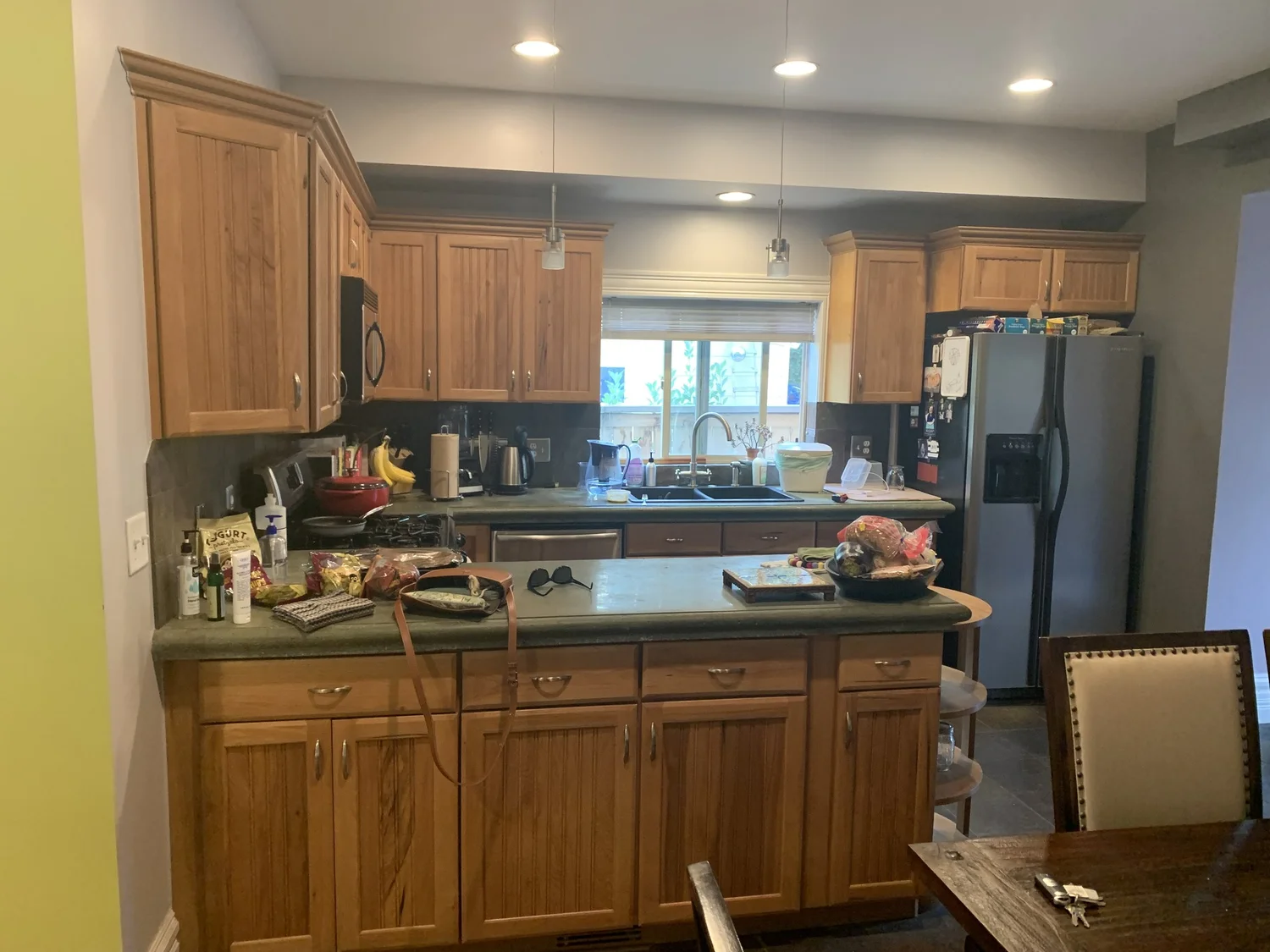
Our planning runs in two phases, and we publish the timelines because we think every firm should:
- Feasibility Study, 6 to 10 weeks. Layout options, existing and proposed plans, a defined scope, an estimate, and a rendering.
- Design and Pre-Construction, 3 to 6 months. Renderings, material boards, updated costs, construction documents, the permit submittal, and a specification binder.
That feels long to people who want to start swinging hammers. It's shorter than a build that stalls for three weeks because nobody picked the shower valve. You can see the full breakdown on our process page.
A test for any contractor's planning phase
Ask to see what they hand a client before construction starts. A real sample: the drawings, the selections list, the spec book. If the answer is a one-page estimate and a handshake, the planning services on their website are aspirational.
Denver Permits and Licensing: Home Renovation Contractor Services You Can Verify
Permitting and licensing are the one part of home renovation contractor services you can check on your own. Here's what matters in Denver:
- The license class. Colorado has no statewide general contractor license, so licensing happens city by city. Denver licenses by class, and Class C is the residential class, covering one and two-family homes. Ask for it by name.
- Plumbers and electricians. These trades are licensed by the state, through the Colorado State Plumbing Board and the Colorado Electrical Board. Ask who does that work on your job.
- What needs a permit. Floor plan changes, work on load-bearing walls, new or resized doors and windows, new or rerouted ductwork, and new or relocated electrical or plumbing fixtures.
- How long permits take. Quick permits, including relocated electrical, plumbing, or HVAC fixtures, are typically issued in two or three business days. Larger residential projects go through logged-in review, where the city gives an estimated completion date instead of a fixed turnaround. A good builder builds float into the schedule for it.
- Historic districts. Denver has more than fifty locally designated historic districts, including Potter Highlands, Country Club, Baker, and Curtis Park. Homes in them go through design review before permitting, even for work that's exempt elsewhere, like replacing windows in kind.
One warning sign worth knowing: if anyone asks you to pull the permit in your own name, it usually means they can't. It also shifts responsibility for code compliance onto you. We walk through the details in our guide to how Denver contractor licensing works.
How Can You Tell Whether a Renovation Contractor Is a Good Fit?
Look for experience with your house, not just your style. The best home renovation contractor services on paper mean little if the team has never worked on a house like yours. A portfolio full of white kitchens tells you a firm can finish a white kitchen. It doesn't tell you whether they've opened a plaster wall in an old Denver Square and found balloon framing and knob-and-tube wiring behind it. Ask to see a project from the same era as your home, and ask what they found when they opened it up.
Then find out who will run your job day to day. The person who sells the project and the person on site every morning are rarely the same, and the second one matters more. We put together eight questions to ask on your first call, and they work for any builder you're considering.
Read reviews for process, not results. Every review praises the finished kitchen. Look for the ones that mention a problem: a late delivery, a rotten subfloor, a surprise in the wall. How the firm handled that tells you more than ten reviews about the backsplash.
Last, ask for one reference from a project that didn't go perfectly. Every builder has one. The good ones will give you the phone number.
What Should Homeowners Expect During Construction?
Disruption, even on a well-run job. Expect dust, noise, a steady stream of deliveries and inspections, and some days when a room you rely on is simply gone. If you're living through a kitchen remodel, set up a temporary kitchen somewhere else in the house before demolition.
What separates a good jobsite from a bad one is mostly invisible when it's done right: dust barriers sealed around the work area, floor protection along every path the crew walks, materials staged where they won't get damaged, and a site cleaned up at the end of every day. Ask each firm how they protect the rest of your house and where materials will be stored.
The Denver climate question
Our air is dry, and wood moves. Solid hardwood flooring, doors, and wood panels need time to acclimate to the house before installation, and they'll still shrink a little in January when the heat runs and the humidity drops. Ask how long they acclimate wood flooring and where it sits while it does. A specific answer means they've dealt with gaps in February. A shrug means you might.
How Can a Home Renovation Create Lasting Value?
By making the house work better ten years from now, not just photograph well next month. Plan for the things that never show up in listing photos:
- Storage at the door you actually use, which is often the back or garage door, not the front.
- Lighting in layers: overhead, task, and something warm for evenings.
- A kitchen where two people can pass each other without negotiating.
- Durable surfaces in the places that take a beating: entries, mudrooms, the kids' bath.
- Room to adapt, like a main-floor space that could become a bedroom, blocking in the bathroom walls for future grab bars, or a home office that isn't the dining table.
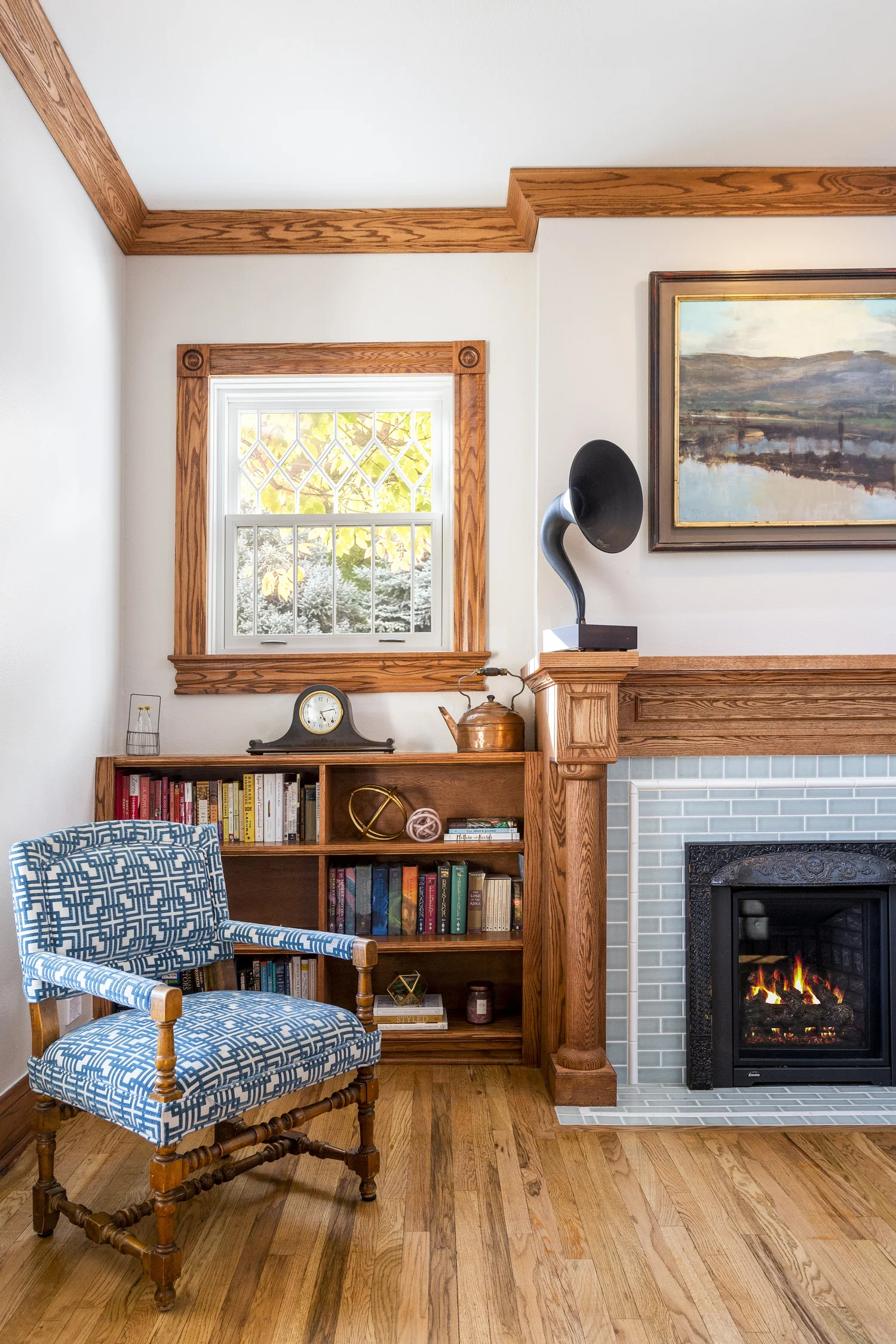
A good renovation also respects what the house already does well. Older Denver homes have real trim, solid plaster, and proportions newer construction rarely matches. Thoughtful design keeps what's worth keeping and changes what isn't, and part of our job is telling you which is which. In this Baker four square, the oak window trim and the fireplace mantel stayed exactly where they were. The original brick wall at the back of the house had structural problems, and it did not. Rebuilding it let us make the kitchen windows larger and bring in northern light the original house never had.
Choosing the Right Home Renovation Contractor Services for Your Project
The team you hire shapes both the finished space and the months it takes to get there. So judge home renovation contractor services by how they're delivered, not by how they're listed. Hand over the list and ask who does each line. Ask what happens before you get a price. Ask for the license class by name. Ask about the job that went sideways. The answers will sort your shortlist faster than any portfolio.
If you'd like to hear how we'd answer those questions, get to know our team, look through projects we've completed around Denver, or reach out to start a conversation about your home. At Lindy Design Build, we make space for you, and that starts with a lot of questions about how you live.
Frequently Asked Questions
1. What does a home renovation contractor typically provide?
Full home renovation contractor services cover feasibility and scope, design, selections, estimating, permitting, scheduling, trade coordination, site supervision, and closeout. Ask which of those the firm performs itself and which it hands to outside companies.
2. Should I hire a designer and contractor separately?
You can, and sometimes you should, for example if you already have an architect you trust or the project is purely decorative. Hiring separately means more handoffs, and the designer and builder won't always see the budget the same way. A design-build team keeps design and construction under one contract. We compare the two approaches in our guide to design-build versus traditional remodeling.
3. How do I prepare for a home renovation?
Write down what doesn't work in your house without naming any products. Settle on a real budget number, tie your timeline to a date that matters, and gather what you know about the home's age and history. Then decide where you'll cook, sleep, or work while the job is underway.
4. How long does a home renovation take?
Construction time depends on scope, since a single bathroom and a whole main-level remodel are very different builds. Planning is more predictable. For us, a Feasibility Study runs 6 to 10 weeks and Design and Pre-Construction runs 3 to 6 months, including the permit submittal. Denver's logged-in permit review gives an estimated completion date rather than a fixed one, so build in some float.
5. What should I ask a renovation contractor before hiring them?
Ask who performs each service on their list, what you'll receive before construction starts, whether they hold a Denver Class C license, who runs the site day to day, how they handle changes and surprises in the walls, and for a reference from a project that didn't go perfectly.
6. Do I need a permit for a home renovation in Denver?
Yes, if you're changing the floor plan, touching a load-bearing wall, adding or resizing doors or windows, rerouting ductwork, or relocating plumbing or electrical fixtures. Painting, tile, floor coverings, cabinet installation, and like-for-like fixture swaps generally don't need one. Homes in historic districts go through design review even for some work that's exempt elsewhere. Confirm with the city before you start.
7. Should I pull the permit myself?
No. If you're asked to pull it in your name, it usually means they can't pull it in theirs, and it makes you responsible for code compliance on work you didn't do. A licensed contractor pulls their own permits.