How Long Does a Whole-Home Remodel Actually Take?
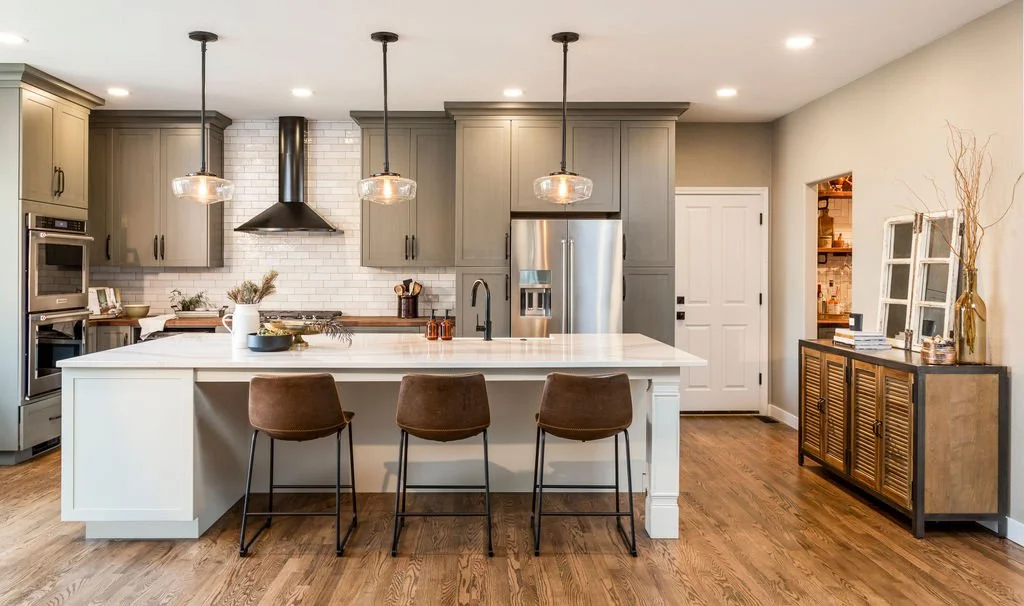
When a homeowner asks us how long their remodel will take, they are almost never asking only about the calendar. They are asking how long they will be cooking dinner on a microwave balanced on a folding table. How long the dust will live in the house. How long until the place feels like theirs again. That is the real question, and it deserves a real answer instead of a hopeful one.
So here is the honest version. A whole-home remodel in the Denver metro generally runs somewhere between six and twelve months, measured from the first real conversation to the final walkthrough. That is a wide range, and the reason it is wide is the most useful thing we can teach you. The number is not random. It is the sum of decisions, and most of those decisions happen long before anyone swings a hammer.
The part nobody counts
When people picture a remodel timeline, they picture the construction. Crews, drywall, the visible progress you can photograph. But the build is the back half of the story, not the whole thing. By the time our team is on site, the hardest thinking is already finished.
We work in three phases, and each one carries its own weight on the clock.
Phase one: figuring out if the project is even possible
Before we promise you anything, we find out whether the project you want is the project your house and your budget can actually support. This is our Feasibility Study, and it usually takes a few weeks. It is short, but it protects every week that follows.
Phase two: where the calendar actually lives
This is the phase that surprises most homeowners. Design and pre-construction can take two to four months, sometimes longer for a complex whole-home. We are making every meaningful decision here, from layouts and materials to the path of a wall and the budget down to real numbers.
We move deliberately on purpose. Every decision made carefully at the desk is a decision that does not become an expensive surprise on site. Denver adds its own variable too, which is permitting. Depending on scope and jurisdiction, permits can take a few weeks to a couple of months, and a historic district or an addition stacks review time on top of that.
Phase three: the part you can finally see
For a whole-home, construction typically runs four to seven months. This is the visible part, and it is also the part that goes smoothest when the first two phases were done right. When our crew walks on site already knowing the plan they helped shape, the work moves at the pace it should. There are fewer change orders and fewer stalls waiting on a decision that should have been settled back in March.
What actually moves the number
Why six months for one house and twelve for another? A handful of honest variables.
Scope is the obvious one. A kitchen and two baths is not the same animal as a full gut with an addition. Then there is age, and the surprises that come with it. Older Denver homes hide things behind their plaster, and we plan for that rather than pretend it away. Decision speed matters more than people expect, because the projects that run long are almost always the ones where choices stalled, not where crews were slow. And material lead times, which have calmed down but still matter for anything custom or imported.
The remodel that finishes on time was planned to
The project that wraps on schedule is not the lucky one. It is the one that was built to. The reason we put so much care into the months before construction is that those months are where the timeline is actually won or lost. We would rather spend an extra two weeks getting the plan right than cost you two months fixing what a rushed plan got wrong.
If you are starting to think through a whole-home project and trying to picture what it would mean for your year, we are glad to walk you through what your specific home would likely need. No pressure, just an honest map of what is ahead.